From peony to new standard
Case study Selman Transports i.c.w. Rietveld | March 2026
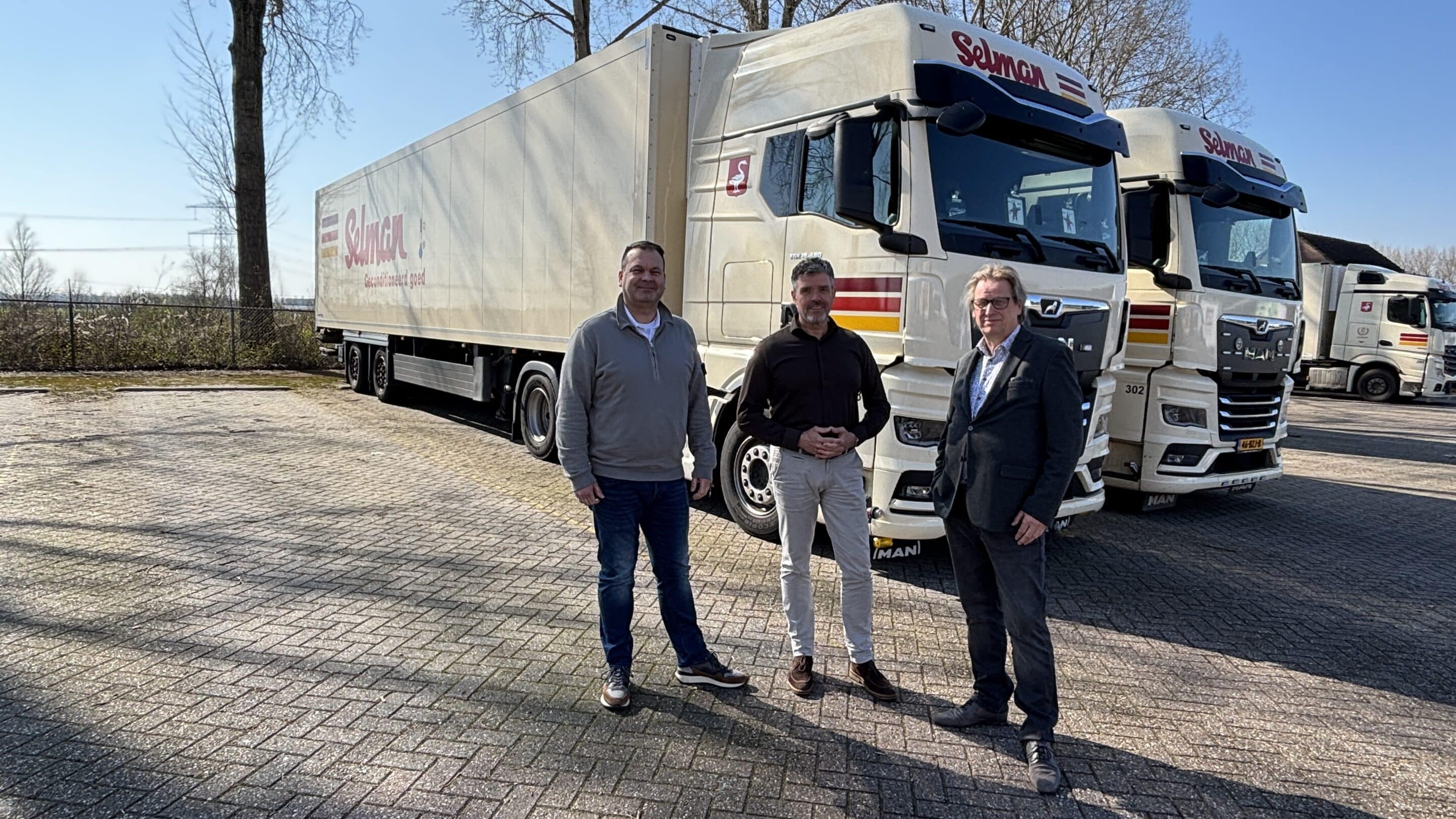
Selman Transporten from Bemmel has been a forerunner in fleet automation since the 1990s. With a fleet of 25 trucks, 35 drivers and 10 office staff, the company is among the innovative medium-sized transporters in the Netherlands.
As early as 1993, Selman was working with one of the first on-board computer systems including satellite communication. At a time when standard solutions hardly existed, the company set up many ICT processes itself. At that time, hours were recorded on the basis of tachograph discs and later via the well-known ‘bar lists’. With the emergence of the on-board computer, Selman further automated this process at an early stage.
Those early experiences led to a clear conviction that remains central to Selman Transporten nl today:
The changing role of ICT: from support to control
In the years that followed, technology developed rapidly. Yet Selman also saw a downside. Whereas automation was originally intended to support processes, in practice it increasingly became a means of control.
Within Selman there is a different view:
- the driver must be able to practice his profession safely and optimally
- systems should support, not drive
- responsibility belongs primarily to the individual, not the system
Automation must not become a substitute for personal responsibility.
This vision increasingly clashed with the role that on-board computers were given in practice.
Collective bargaining agreement leaves no room for interpretation
At the same time, the Professional Freight Transport Collective Bargaining Agreement has become increasingly rigid over the years. For Selman, this means:
- differences in interpretation hardly exist anymore
- deviations are not desirable
- discrimination on compensation is virtually impossible
“The rules are so tight that you can’t differentiate yourself on that.”
This is precisely why objective, reliable and uniform registration has become essential. Not to control, but to reward correctly and fairly.
The breakthrough: pay without an on-board computer
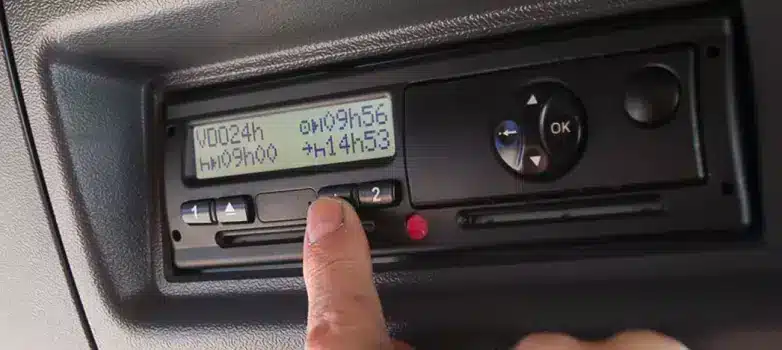
With the advent of the digital tachograph 2.2, a new opportunity arose. This tachograph records driving, working and rest times in accordance with legislation and offers additional functionalities such as loading/unloading.
For Selman, this was the tipping point.
Instead of adding an additional system (on-board computer), the insight emerged:
the necessary data is already present in the truck.
Together with Rietveld, this idea was developed into a working solution in which:
- the tachograph 2.2 is the basis for time recording
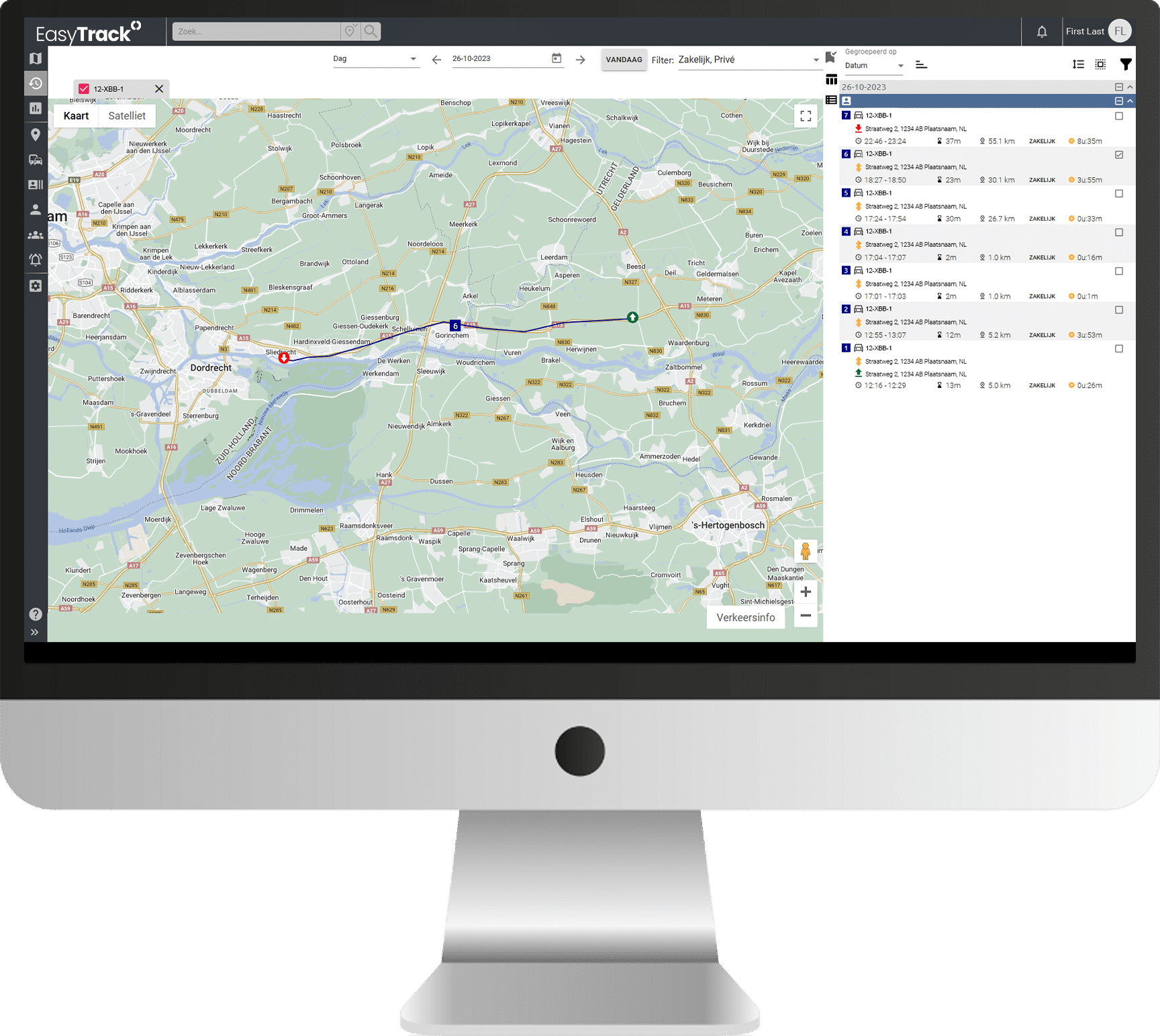
- the Qan-All vehicle server that provides trip and location data
- EasyHours provides automatic pay according to collective bargaining agreement
With this, an important goal was realized: Full pay without an on-board computer.
Fewer systems, more clarity
This approach creates a simpler and more robust process:
- no duplicate registrations
- no additional hardware in the cabin
- no dependence on on-board computers
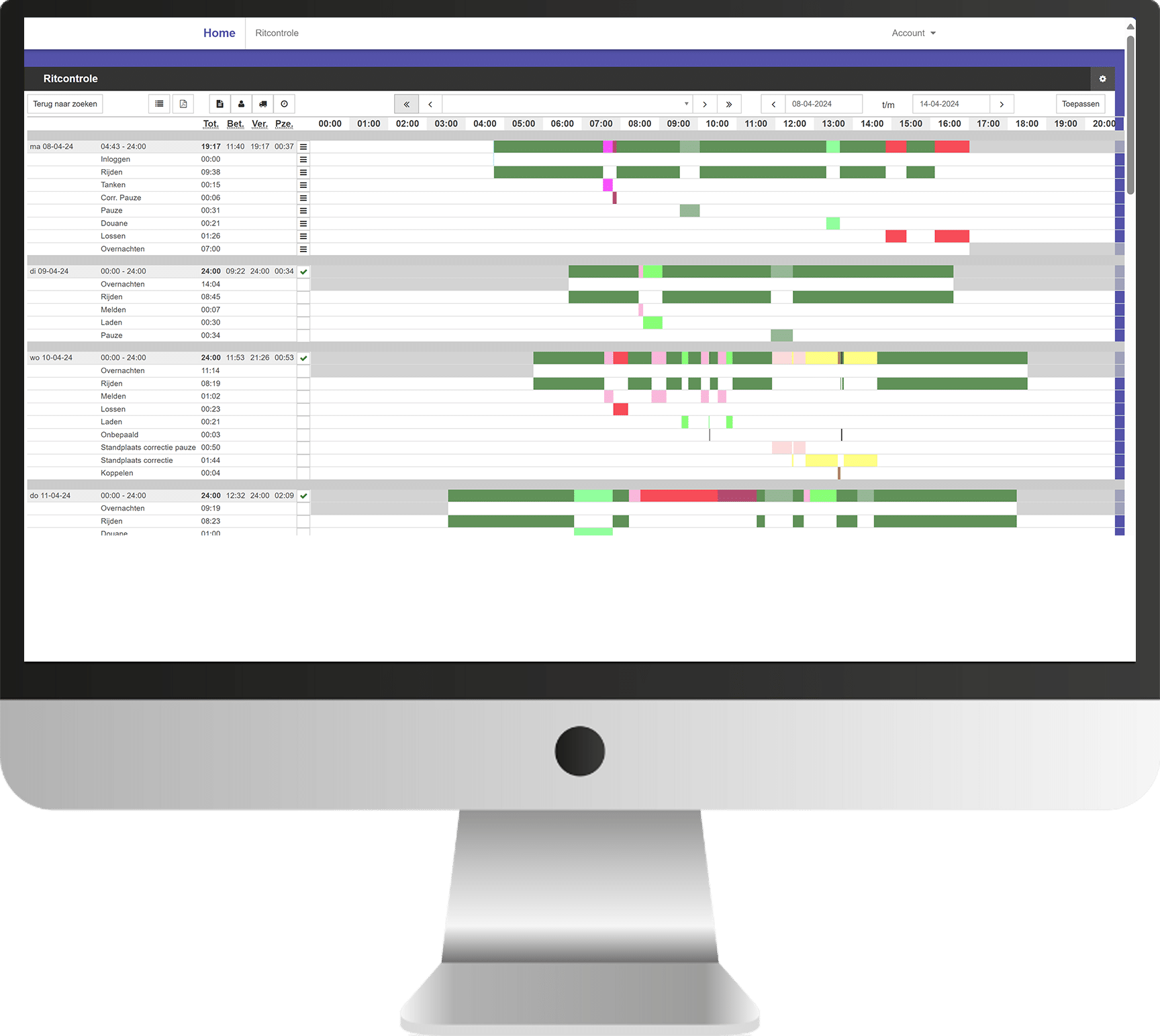 The driver records his activities through the tachograph, as required by law.
This data is automatically processed into a correct salary advance calculation.
This provides:
- complete transparency
- 100% CLA-compliant compensation
- More ‘forced’ responsibility on drivers for driving and rest periods
- less discussion afterwards
- fewer distractions in the cabin
The driver central

An important principle within Selman is:
“The driver is not an accountant.”
By basing remuneration on tachograph data, the administrative burden for the driver is reduced. Especially in a market with a growing proportion of international drivers, this is essential.
- the tachograph is known to every driver
- operation is part of the legislation
- additional systems create unnecessary complexity
In addition, less interaction with systems contributes to:
- higher road safety
- fewer distractions on the road
Planning, communication and documentation are done through a separate mobile app, keeping functions separate and maintaining overview,
Developing together with Rietveld
To develop this solution, Selman deliberately sought a partner who looks beyond standard products.
Not a supplier, but a party that wants to develop together.
That partner was found in Rietveld.
With the advent of the tachograph 2.2, both parties saw the potential for a fundamentally different way of organizing payroll. Over a period of about a year, the link between tachograph data with Qan-All hardware – under the hood – and EasyHours was developed, tested and optimized in practice.
The collaboration was characterized by:
- open communication
- mutual understanding
- joint problem solving
René Jansen, Selman operations manager:
“With mutual understanding and empathy, you ultimately develop an excellent solution together. We believe compliance with driving and rest periods is essential to sending our hard-working people on the road safely.”
Industry relevance
The solution follows a broader development in the transportation sector:
- data is becoming increasingly available and linkable
- systems are becoming more transparent
- the need for simplicity is growing
According to Rietveld, this approach offers opportunities especially for:
- transportation companies that want to pay without the use of an on-board computer
- organizations with tachograph requirements for vans weighing 2,600 kg or more
- companies with international drivers
- carriers seeking to comply with laws and regulations without added complexity
Conclusion
With this solution, Selman Transport shows that innovation does not always mean adding more technology, but rather making smarter use of what is already there.
Putting the tachograph at the center and letting go of the on-board computer creates a model that:
- easier
- fairer
- and future-proofed
A development that could fundamentally change the way the transportation industry is paid.
Learn more
Curious about the possibilities or want to explore together what this could mean for your organization? We are happy to think along with you. Contact us.